
Information system testing and quality qssurance
Information system testing and quality qssurance
We ensure the functionality, stability, usability and compliance of information systems—from test strategy and automated testing to user acceptance testing.
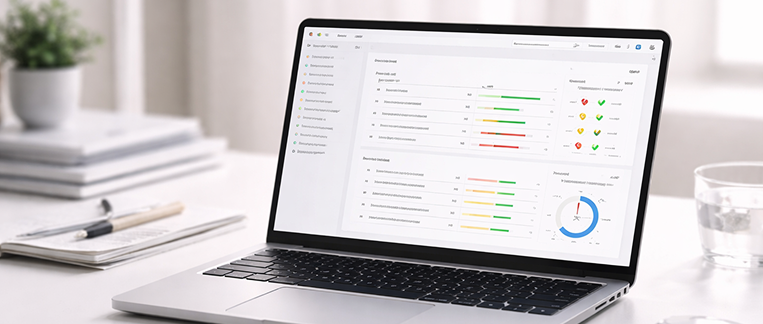
Quality embedded throughout the development lifecycle
Systematic quality assurance helps identify defects early, reduce remediation costs and ensure that the final solution meets business and user expectations. We integrate testing throughout the system development and enhancement lifecycle.
Common challenges:
Insufficient test coverage across the project lifecycle
Quality control is fragmented and inconsistent
Accessibility, GDPR and other requirements are not adequately assessed
Our approach: security starts with assessing the systems. We identify vulnerabilities in information systems and IT infrastructure, assess their risk and provide clear recommendations for addressing security gaps.
What the service includes
Functional testing
We verify the implementation of functions, business rules, user scenarios and requirements.
Integration testing
We assess data exchange, API integrations and interactions between system components and external solutions.
Test automation
We build automated regression, API and other tests to make change verification faster and more reliable.
Usability and accessibility testing
We assess the user experience, interface clarity, accessibility and compliance with applicable requirements.
Data protection and compliance checks
We verify personal-data processing scenarios, access permissions, audit mechanisms and the implementation of GDPR principles.
User acceptance testing (UAT)
We help plan and conduct final solution acceptance, manage defects and assess readiness for production.
Value to client
A better user experience
Consistent testing reduces the risk of operational disruptions and critical defects in production.
Faster changes
Automated tests make it safer to release new system versions more frequently.
More stable systems
The solution is tested against real user scenarios, usability and accessibility criteria.
Earlier defect detection
Problems are identified during development, when they can be resolved more quickly and economically.
Service model
Services can be delivered as a standalone initiative or integrated throughout the project lifecycle:

Test strategy and plan
Duration: 1–3 weeks
Includes
•
Requirements and risk analysis
•
Defining the test scope, methods, environments and data
•
Defining test acceptance criteria
Result
A clear test strategy
An agreed plan
Defined quality criteria

Test execution
Duration: Based on project scope
Includes
•
Functional, integration, regression, usability, accessibility and other agreed testing
•
Functional, integration, regression, usability, accessibility and other agreed testing
•
Functional, integration, regression, usability, accessibility and other agreed testing
Result
Defect register
Test evidence
An objective assessment of system quality

Test automation
Duration: 3–8 weeks and ongoing support
Includes
•
Selecting scenarios for automation
•
Developing tests and integrating them into CI/CD
•
Monitoring results
Result
A reusable automated test suite
Faster regression testing
A reusable automated test suite; faster regression testing

UAT and acceptance support
Duration: 1–4 weeks
Includes
•
Preparing UAT scenarios
•
Coordinating users
•
Analysing results and monitoring defect resolution
Result
An evidence-based decision on system acceptance and readiness for production
An evidence-based decision on system acceptance and readiness for production
An evidence-based decision on system acceptance and readiness for production
When this service creates the most value
When an independent assessment of system quality is required before acceptance
When frequent changes increase the risk of regression defects
When a new information system is being developed or substantially modernised

Ensure quality before the system becomes critical
We will prepare a testing model, assess the key risks and support evidence-based decision-making.
Discuss the project