
Crime Statistics Analysis and Open Data System
The project fundamentally modernised the publication and use of crime statistics. A historical statistics archive was digitised and integrated into a single data environment, while data previously presented in static reports was transformed into structured, filterable and analysable datasets. The solution also introduced an open data database, interactive analysis wizards, dynamic reports, visualisations, data export and programmatic access.
The challenge
The task
The Information Technology and Communications Department sought not only to create a modern crime statistics analysis platform, but also to digitise a substantial historical paper archive and convert it into structured data suitable for analysis. Historical reports were scanned and uploaded to the system, while specialised automated solutions were developed to read and convert the reports, extract indicators and values, and load them into the open data database. The documentation specifically provided for digitising annual statistical reports from 1990 to 1999, publishing archived data and migrating later structured statistical data to the new open data database.
Another key challenge was to harmonise heterogeneous historical statistics using a common structure of indicators, dimensions and classifiers, so data from different periods could be filtered, compared and analysed consistently. Report-reading and import components were developed for this purpose, together with configuration of indicators and dimensions and a logical open data database for structured statistical indicators.
The ultimate objective was to turn the historical statistics archive into a publicly usable digital data resource. Users needed to be able to download reports, select periods, municipalities, Criminal Code articles, personal characteristics and other criteria, generate dynamic reports and analyse results in interactive tables and charts. The project therefore combined archive digitisation, data transformation, open data database development and interactive analysis tools in one solution.
Main features

Crime data analysis and visualisation
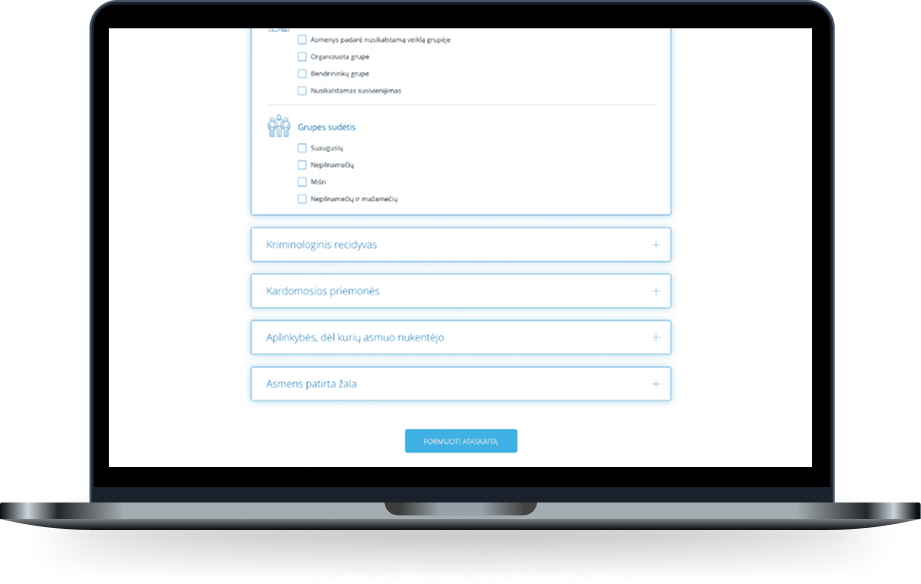
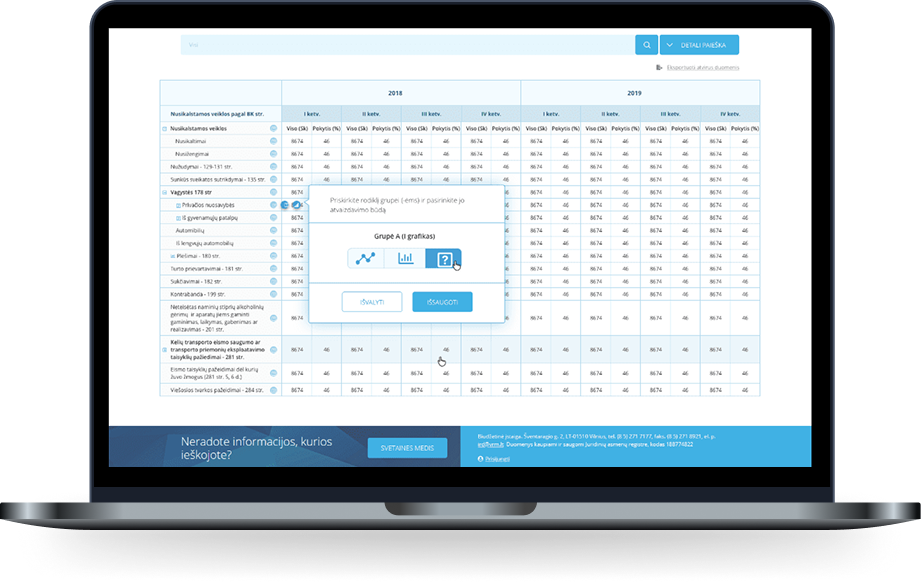
Interactive analytical tools for filtering, comparing and analysing crime data by period, municipality, Criminal Code article, type of offence, personal characteristics and other dimensions, with results presented in tables and charts.

Interactive report generation
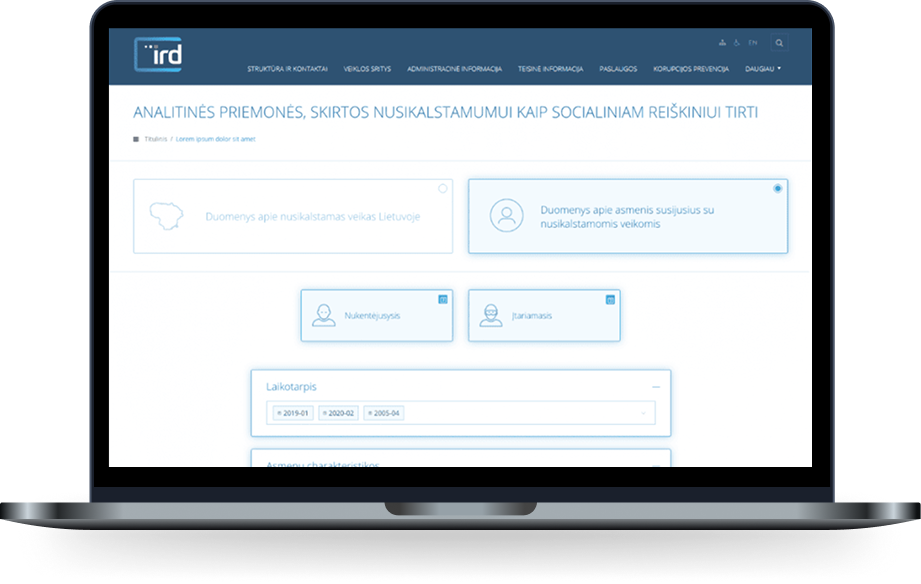
Report wizards covering municipalities, Criminal Code articles, suspected or accused persons and victims, allowing users to select analysis criteria and the required level of detail.

Open data and export
Publishing crime statistics datasets in open formats, downloading data in CSV, Excel, PDF and XML formats, and exporting charts as JPG or PNG files.

Indicator, dimension and classifier management
Administration of statistical indicators, values, dimensions, key families, classifiers and data structures, providing a flexible foundation for analytical reporting.

Statistical report management
Centralised upload, updating, publication, viewing and administration of NVŽR statistical reports and datasets, with report indicators read automatically into the Open Data Database.

Open data web services
Programmatic access to statistical data through HTTP/URL requests, allowing other systems and applications to retrieve filtered, up-to-date datasets automatically.

DCAT metadata management
Creating, administering and exporting dataset metadata according to the DCAT structure, ensuring consistent descriptions, discoverability and machine use.

Historical data and archived reports
Publishing and viewing digitised statistical reports from 1990–1999 and archived data from 2000–2003, ensuring long-term access to crime statistics.

Search, filtering and system administration
Search and filtering across datasets, reports, indicators and dimensions, together with administration, access control, security, error logging and technical maintenance.

The result
A Public Crime Statistics Analysis Platform
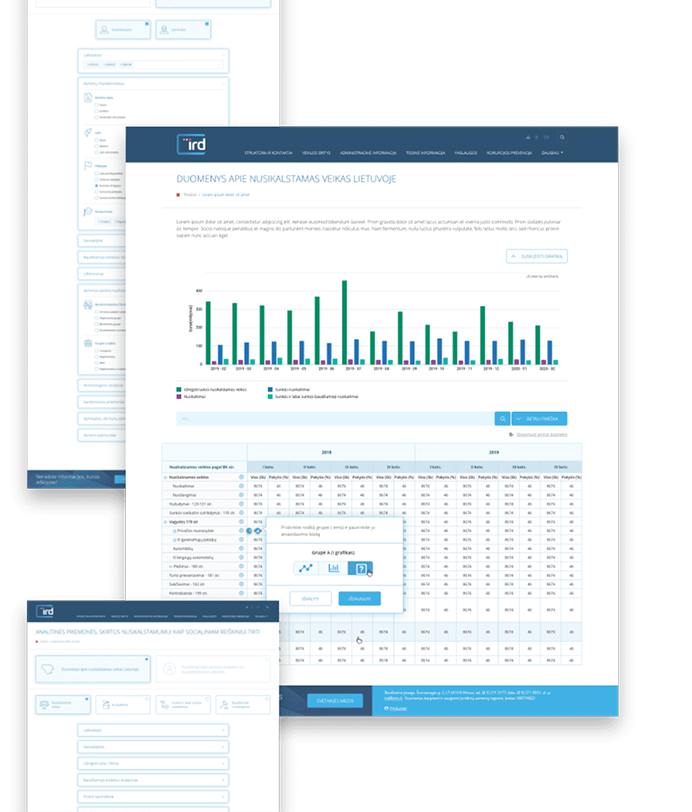
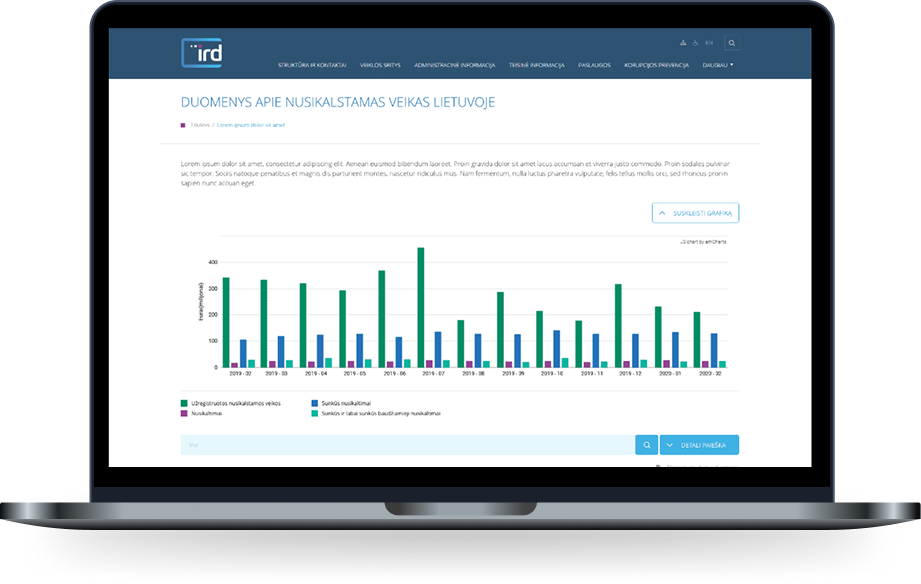
The final solution is a crime statistics analysis and open data platform integrated into the IRD website. It combines a historical report archive, a structured statistical database, interactive report-generation tools and public data-distribution services. The project digitised historical statistical reports, migrated their data to the system and used purpose-built data-reading and import components to transform report indicators and values into a structured open data database. Users can analyse crime data by period, municipality, Criminal Code article, type of offence, personal characteristics and other dimensions; generate dynamic reports; change the level of detail; compare indicators; and view results in tables and interactive charts. Data can be exported to Excel, PDF and CSV, as well as graphic formats, while open datasets and their DCAT metadata can also be accessed programmatically by other systems. The solution also includes administration tools for managing indicators, dimensions, key families, classifiers and data structures, allowing the platform to be continuously supplemented with new statistical data and maintained without major software changes.
Project results
The project covered the full implementation lifecycle for the crime statistics analysis and open data solution: historical data and report analysis, digitisation, data structure design, development of analytical and administrative functions, preparation of the open data database, implementation of data import and conversion mechanisms, deployment, testing and preparation for operation. Specialised components were created to read indicators from statistical reports, link them to dimensions and classifiers, update the data and publish it for public use. An interactive crime statistics analysis environment was also developed and deployed. It allows users to generate dynamic reports by period, municipality, Criminal Code article, type of offence, personal characteristics and other criteria, present results in tables and charts, and export them in various formats. Open data publication, DCAT metadata management and programmatic data delivery to other systems through web services were implemented as well. The final result is not only a new analytical platform, but also a digitised and structured crime statistics data resource whose information is publicly accessible, filterable, visualised and suitable for both human users and other information systems.
A flexible, administrable analytical platform
Interactive crime data analysis
Open and reusable data
A structured open data database
Automated data import and updates
A digitised historical crime statistics archive